
Middle school classrooms are full of interruptions and distractions. Assemblies. Testing schedules. Last-minute announcements. Spirit days. Fire drills. I could go on. And on.
But in my classroom, the first 10 minutes belong to reading. No matter what.
Even if we get interrupted by a fire drill, we come back in and return directly to reading. The routine continues because students need to see that reading is not something we squeeze in if extra time appears. It comes first. It matters enough to protect.
Reading is not the thing that gets pushed aside for:
- test prep
- makeup work
- random announcements
- unfinished homework
- “one quick thing”
- extra transition time
The first ten minutes belong to reading. Every day.
Reading comes first.
And protecting those first ten minutes has completely changed the culture of my classroom.
Table of Contents
- Reading Stops Feeling Optional
- The Expectations Matter
- The Environment Feels Different
- It Gives English Teachers Space and Time
- Eventually Check-Ins Happen Naturally
- A Classroom Library Matters
- The Routine Creates Real Readers
Reading Stops Feeling Optional
Middle school students notice what adults prioritize. If reading only happens after the “important stuff” is done, students quickly learn that reading is extra. Disposable. Something that gets pushed aside when life gets busy.
But when reading happens every single day, no matter what, students start to understand: reading matters enough to protect.
The consistency changes the energy in the room. Students walk in knowing exactly what to do. Books come out automatically. Conversations quiet down faster. The room settles.
That predictability matters, especially for middle schoolers who spend most of their day moving from one fast-paced environment to another.
Over time, students stop seeing reading as an assignment and start seeing it as part of who they are in the classroom.
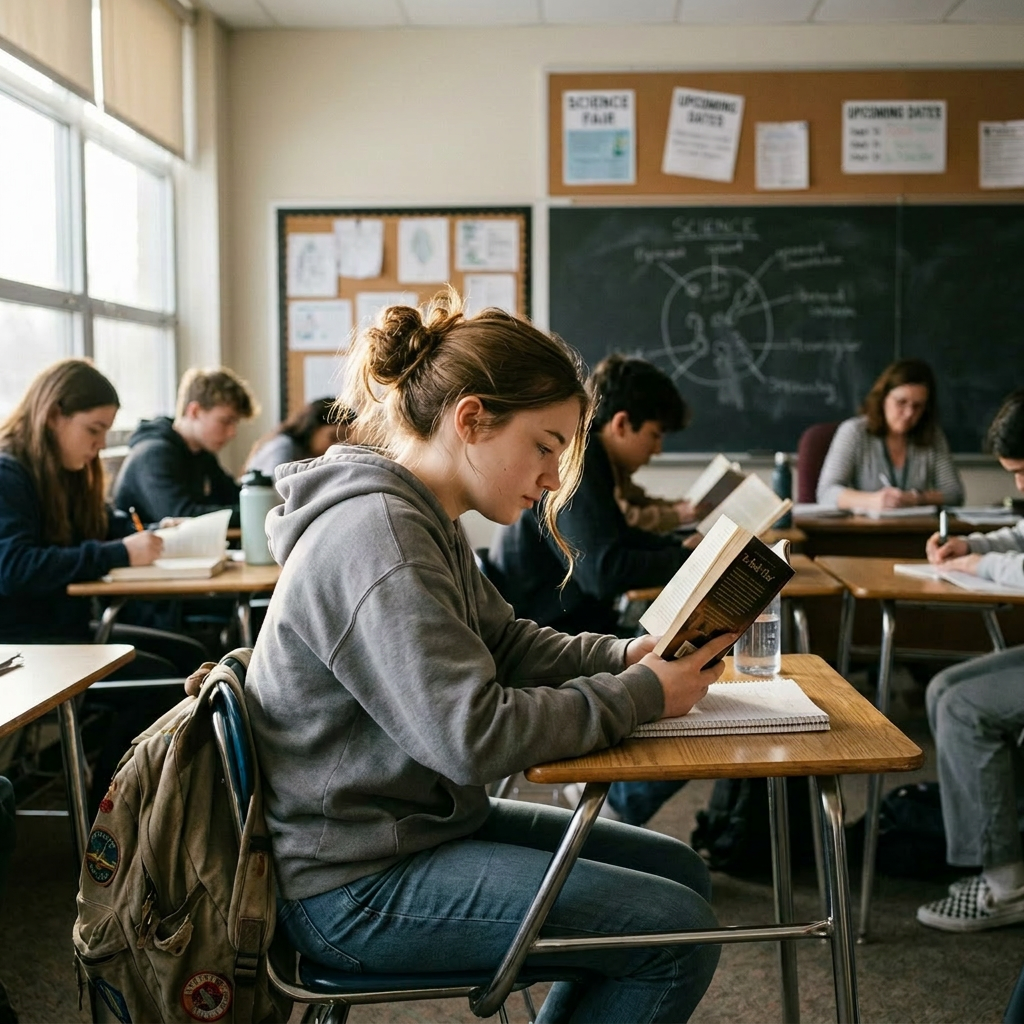
The Expectations Matter
This routine only works if students understand that it is non-negotiable.
In my classroom, if students are not seated and actively reading when the bell rings, they are marked tardy. Students quickly learn that I take this time seriously.
The expectations are clear, calm, and consistent.
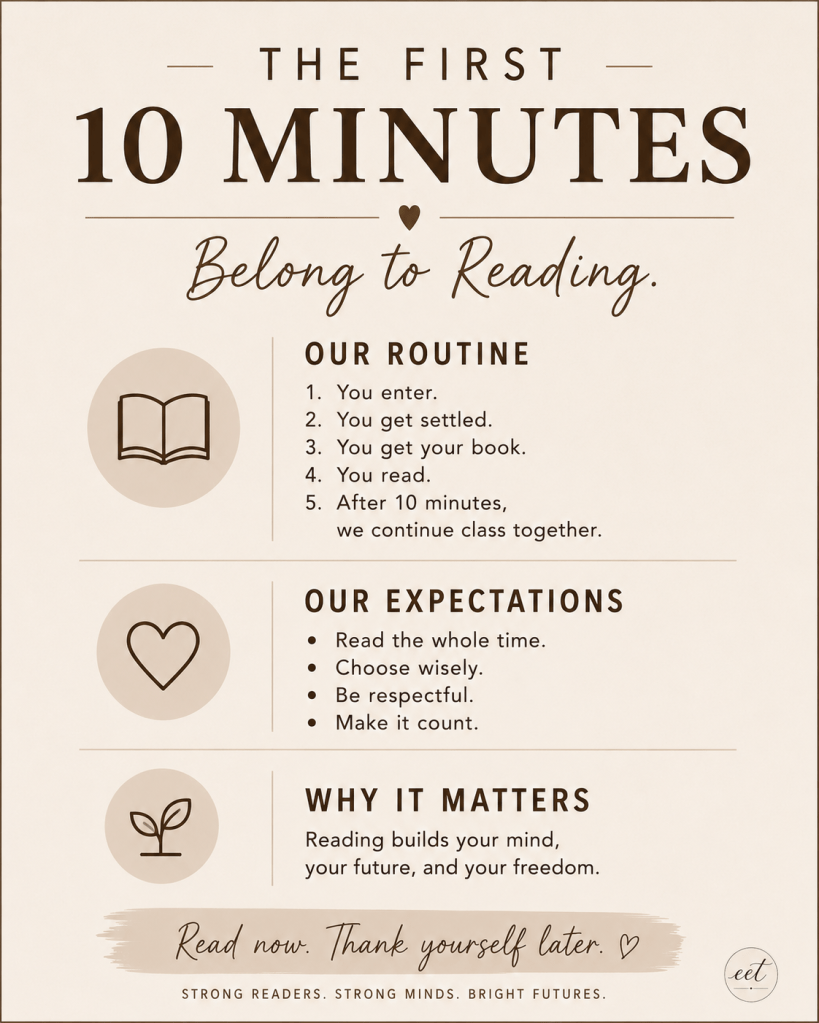
The agenda is always projected at the front of the room before students walk in. At the very top is always reading time, followed by the lesson objectives for the day. Those objectives consistently include language connected to reading and monitoring their own reading lives because independent reading is not separate from the curriculum. It is part of it.
Students also know that unless there is a real emergency, they cannot approach me during this time. This is protected reading time. It is also the time I use to quietly reach out to students individually, check in with someone who seems off, update absent students, or hold a quick conference.
The structure creates calm because students know exactly what to expect.
Pin this story to save it…

The Environment Feels Different
I have learned that the atmosphere matters more than many people realize.
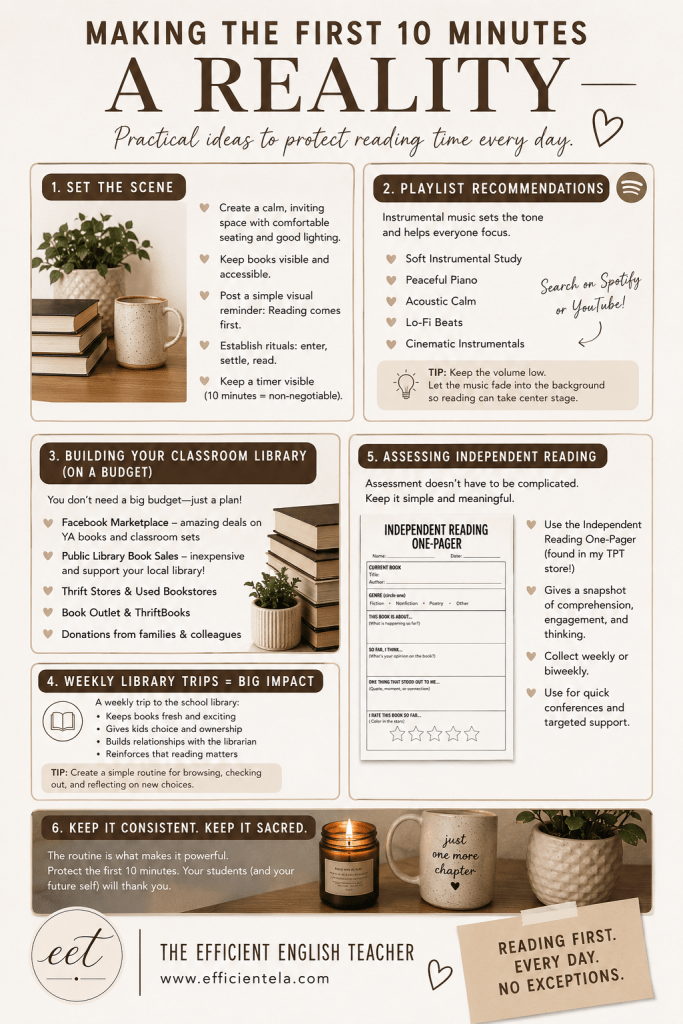
Every day, light background music plays while students read. Spotify has endless reading playlists that help create a calm environment without becoming distracting. It softens the room immediately.
The combination of predictable routines, quiet music, books opening, and students settling into reading creates a completely different start to class than the frantic energy many middle school classrooms naturally slide into.
Instead of beginning class with reminders, redirection, noise, and logistics, class starts with focus.
And honestly, students seem to need that just as much as teachers do.
To help teachers actually implement this routine, I created The First 10 Minutes Reading Routine Posters + Teacher Toolkit. This resource includes a collection of modern reading posters for middle and high school classrooms along with a practical teacher tip guide for launching and sustaining independent reading time.
It Gives English Teachers Space and Time
Those ten minutes help students become readers, but they also create something teachers desperately need: breathing room.
While students read, I can take attendance accurately without chaos. I can quietly pull a small group that needs support. I can answer questions from students who were absent yesterday. I can check on a student who looks upset before instruction even begins.
Sometimes those moments are small.
“Hey, I noticed you seemed frustrated yesterday.”
“Do you need help getting caught up?”
“How did the game go last night?”
Those conversations matter.
Without dedicated reading time, those interactions either interrupt instruction or never happen at all.
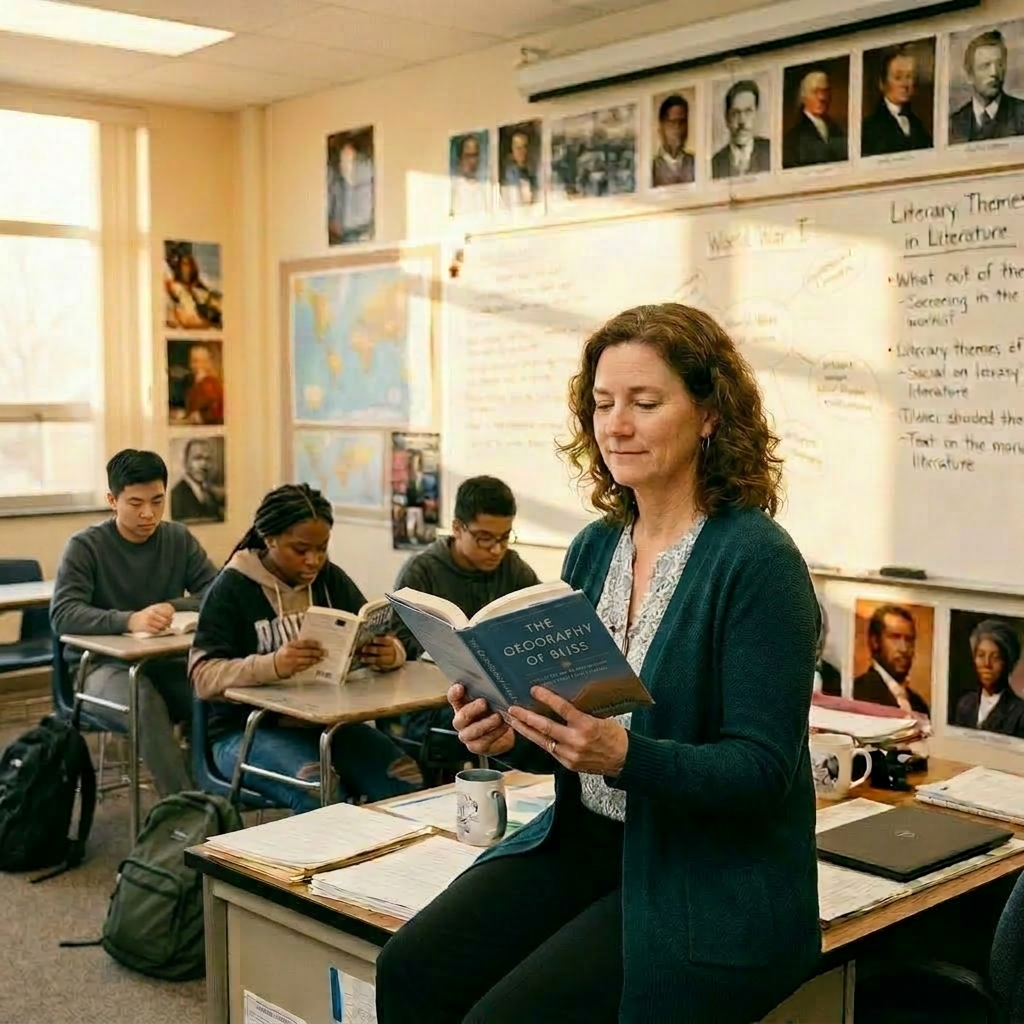
Eventually Check-Ins Happen Naturally
One unexpected benefit of protecting the first 10 minutes is that it creates space for quiet, efficient support without disrupting the flow of class.
Because students know the expectations and settle into reading quickly, I can use that time to briefly check in with individual students, help someone who was absent, or quietly touch base with a small group if needed. It is important to note that I don’t try to do these check-ins until we have established that reading time is primarily for silent reading.
The key is that the reading routine stays intact. The class is still reading. The room stays calm. And because the structure is so consistent, those quick moments of support happen naturally without pulling attention away from reading itself.
A Classroom Library Matters
This routine also depends heavily on access.
A well-stocked classroom library matters more than people think. Students cannot build reading lives if they constantly struggle to find something they actually want to read.
The best classroom libraries include variety:
- graphic novels
- sports books
- thrillers
- short nonfiction
- audiobooks
- magazines
- novels in verse
- humor
- high-interest low-readability options
- picture books
And honestly, magazines are some of the most underrated reading tools in middle school classrooms.
Students love magazines like The Week Junior and National Geographic because they allow students to successfully engage with reading, even on days when sustained novel reading feels harder.
Reading volume matters. Reading confidence matters. Access matters.
The Routine Creates Real Readers
Ten minutes may not sound like much, but ten minutes every day adds up quickly.
Students who rarely read outside of school suddenly finish books. Students who claim they “hate reading” start asking friends for recommendations. Students build stamina without even realizing it because the routine does the work.
At the end of the ten minutes, I transition into the rest of class by going over the agenda and lesson objectives. Because students have already settled into the room mentally, instruction starts more smoothly, too.
Independent reading is no longer something I “fit in.”
It is the part of class that makes everything else work.
 The Efficient English Teacher
Leave a comment