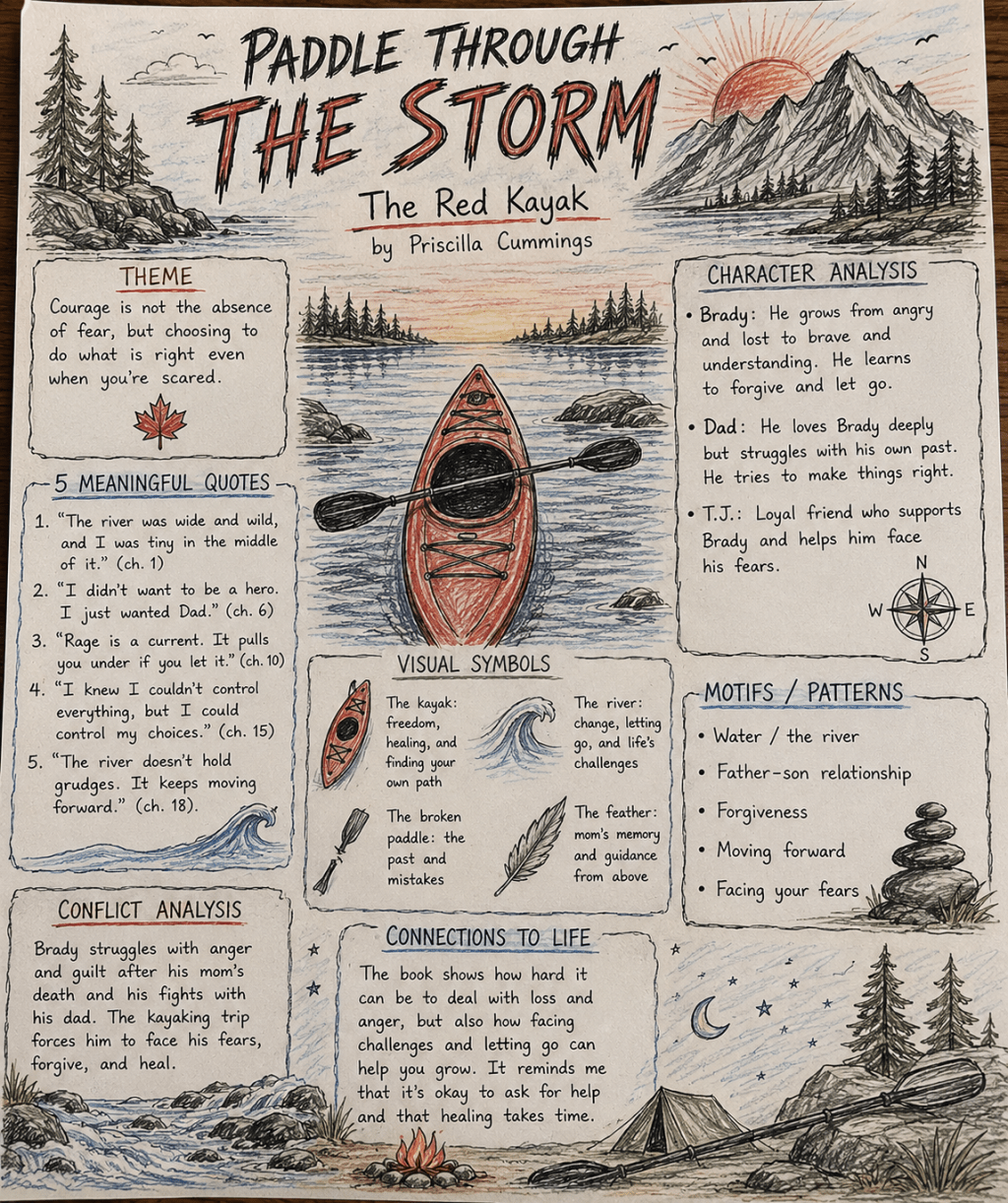
Most English teachers believe that independent reading matters. The hard part is figuring out how to assess it.
That’s where the one-pager comes in.
A strong independent reading one-pager gives students space to think, connect, analyze, sketch, quote, explain, and synthesize. Even better? The structure can stay almost exactly the same all year long.
Instead of reinventing the wheel every marking period, teachers can reuse the same directions, rubric, examples, and expectations. On repeat.
Students become familiar with the process, which means less time explaining and more time reading and thinking deeply about books.
Table of Contents
- Why the One-Pager Works for Independent Reading
- The Real Secret: Repetition
- Teachers Can Reuse the Same Materials All Year
- What Makes a Strong Independent Reading One-Pager?
- Why Students Usually Buy Into It
- A Sustainable Assessment for Busy Teachers
- Final Thoughts
Teachers who want to simplify independent reading assessment without lowering expectations can grab the complete Independent Reading One-Pager Toolkit in the The Efficient English Teacher TPT Store. The resource includes everything needed to run this assignment all year long.
Why the One-Pager Works for Independent Reading
Independent reading can feel difficult to assess. Traditional book reports can be written quickly without having read the book. Reading logs are compliance tasks (that can make reading feel like a chore). Quizzes reward memorization more than thinking.
A one-pager shifts the focus.
Students need to read in order to:
- Identify important themes
- Select meaningful quotes
- Explain character growth
- Make visual and symbolic choices
- Show understanding through both writing and design
- Synthesize the book into a single page of thinking
The assignment naturally pushes students toward analysis instead of plot summary.
It also reinforces literacy skills taught all year long:
- citing evidence
- analyzing themes
- discussing symbolism
- making claims
- explaining reasoning
- supporting ideas with details
- connecting text to larger ideas
The more students complete one-pagers throughout the year, the stronger those habits become.
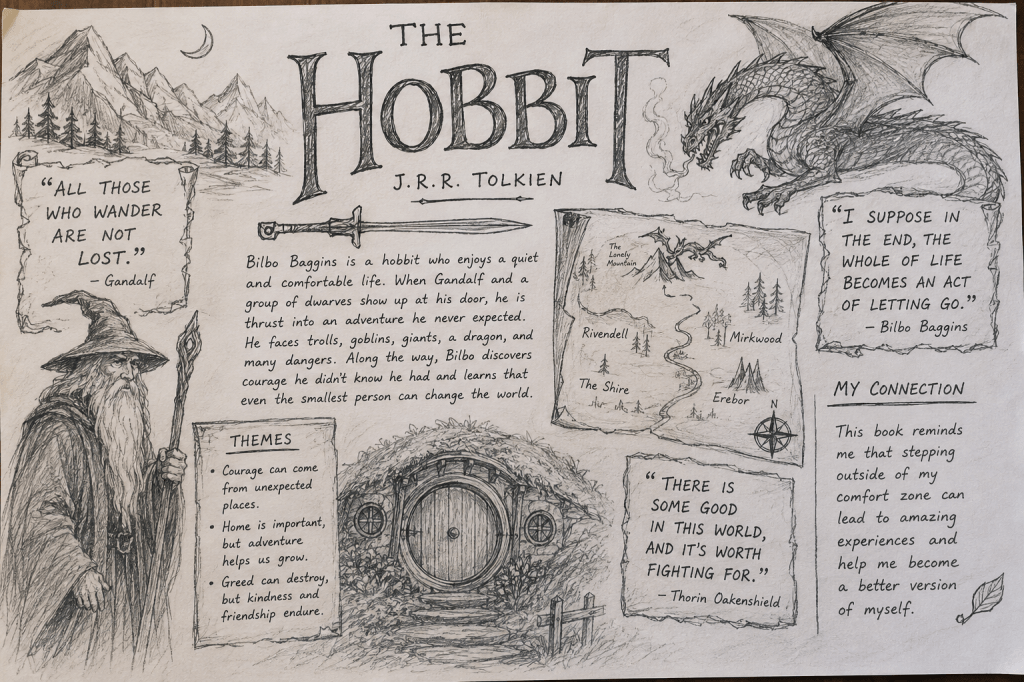
The Real Secret: Repetition
Most teachers already know students perform better when routines become predictable.
The same is true for assessment.
Using the same one-pager format each quarter removes unnecessary confusion. Students already know:
- where the quote goes
- how much writing is expected
- how the rubric works
- what strong analysis looks like
- how to organize the page
- what quality effort feels like
That means less time spent answering procedural questions like:
“How many quotes do we need again?”
And more time spent asking:
“Why do these symbols matter to this character?”
The assignment becomes familiar enough that students can focus on thinking rather than figuring out the directions.
Teachers Can Reuse the Same Materials All Year
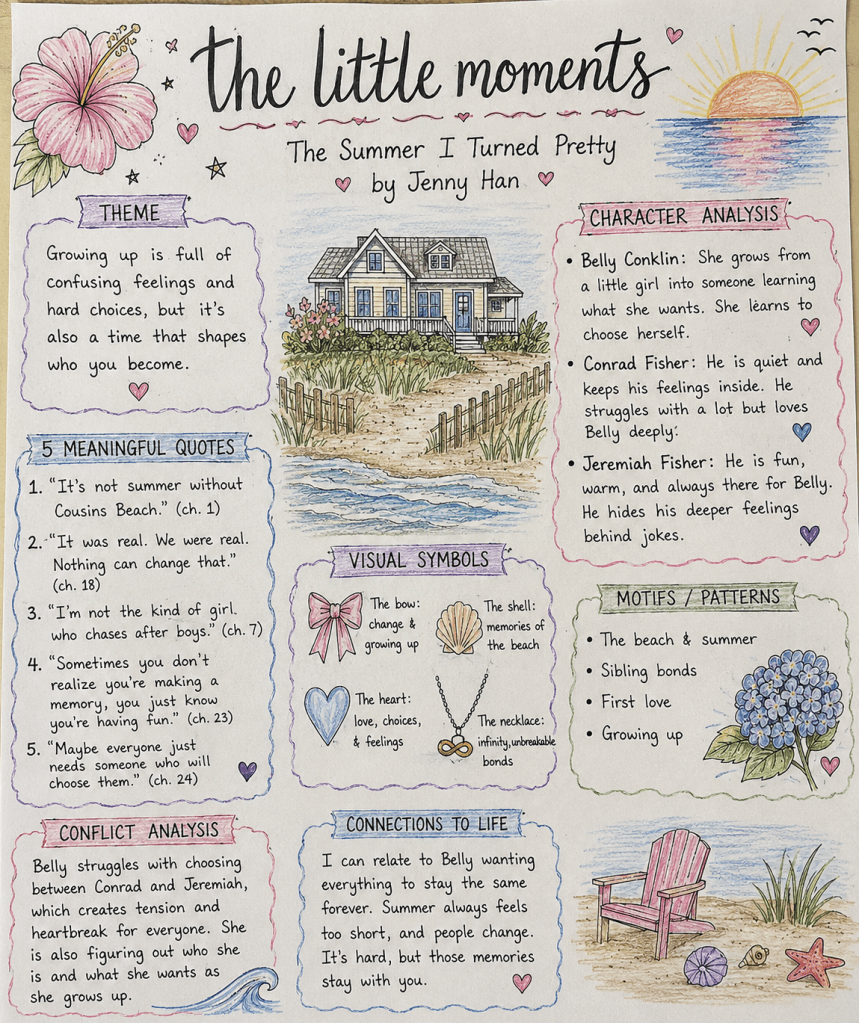
One of the best parts of the independent reading one-pager is how reusable it becomes.
Teachers can keep:
- the same rubric
- the same checklist
- the same sample models
- the same grading categories
- the same expectations
Only the books change.
That consistency dramatically cuts down planning time.
Students also improve faster because they can compare their growth across quarters. Many teachers notice that by the third or fourth one-pager, students naturally begin:
- choosing stronger quotes
- writing deeper explanations
- creating more thoughtful symbolism
- organizing ideas more clearly
- taking more ownership over their reading
Pin this to save it…
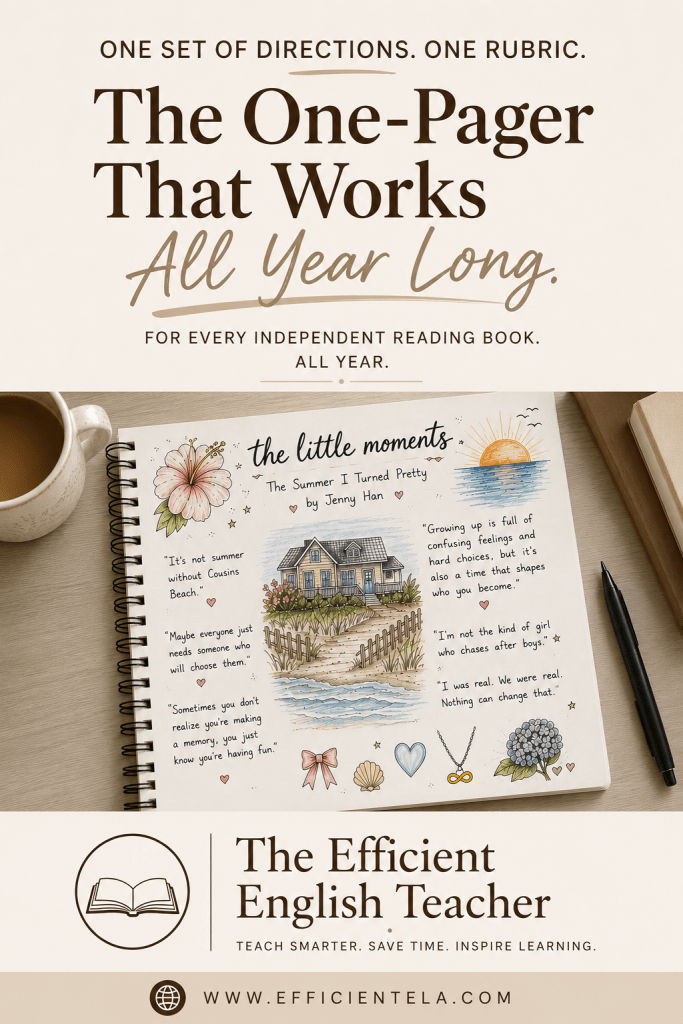
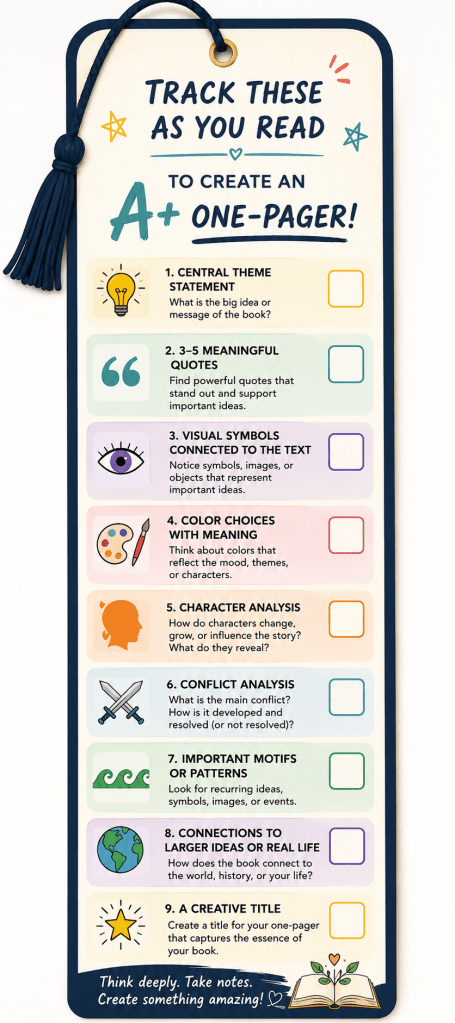
What Makes a Strong Independent Reading One-Pager?
The strongest one-pagers usually combine visual thinking with concise literary analysis.
Many teachers include:
- a central theme statement
- 3–5 meaningful quotes
- visual symbols connected to the text
- color choices with meaning
- character analysis
- conflict analysis
- important motifs or patterns
- connections to larger ideas or real life
- a creative title
The visual component matters more than many students initially realize.
When students decide:
- what image represents a character
- how to visually show conflict
- what colors reflect tone
- what symbols capture theme
…they are analyzing literature in a different way.
Some students who struggle with essays absolutely shine during one-pagers because the format allows them to process ideas visually first.

Why Students Usually Buy Into It
Students tend to respond well to one-pagers because they feel different from traditional tests.
The assignment feels:
- creative
- manageable
- personal
- visual
- flexible
But underneath the creativity is rigorous thinking.
Students still must:
- analyze
- justify
- support ideas with evidence
- explain significance
- synthesize information
The project simply hides some of the rigor inside a creative package.
Middle school students especially appreciate seeing examples before starting. Over time, teachers can build a collection of:
- A-level examples
- average examples
- incomplete examples
Showing models repeatedly throughout the year helps students internalize expectations far more effectively than rereading directions.
A Sustainable Assessment for Busy Teachers
English teachers already grade constantly.
The last thing most teachers need at the end of a quarter is a complicated new assessment requiring hours of prep and explanation.
A repeatable one-pager system simplifies everything:
- same rubric
- same directions
- same examples
- same grading categories
- same structure
That frees teachers to focus on conferencing with students, talking about books, and actually helping readers grow.
And realistically? Students benefit from repeated structures far more than constantly changing assignments.

Final Thoughts
Independent reading deserves an assessment that values thinking, creativity, and analysis without creating unnecessary work for teachers.
The one-pager does exactly that.
When used consistently throughout the year, it becomes more than a project. It becomes a familiar thinking routine. Students begin recognizing themes faster, selecting stronger evidence, and communicating ideas more clearly because the structure reinforces those skills over and over again.
Sometimes the best classroom systems are not the fanciest ones.
Sometimes they are simply the ones teachers can realistically sustain all year long.
 The Efficient English Teacher
Leave a comment