Middle school students are not naturally good at group work.
Some dominate discussions. Some disappear completely. Some get distracted after thirty seconds. Others quietly carry the entire assignment while the rest of the group debates snack preferences or sharpen pencils for an alarming amount of time.
But the truth is that most students have never actually been taught how to work well with other people.
They have been placed in groups.
They have been told to collaborate.
But collaboration itself is rarely, if ever, taught as a skill.
That is why explicit instruction around productive group work matters so much in middle school classrooms.
When teachers build simple systems around discussion, accountability, respectful disagreement, and conflict resolution, students begin solving small problems independently — without the teacher needing to referee every interaction. (Can I get an Hallelujah?!)
Prior to teaching this, it is important to know the goal. The goal is not perfectly quiet groups or forced cooperation.
The goal is to help students learn how to function respectfully and productively with other humans. Fair warning, this can be messy.
But it is worth the mess. Because it just might be one of the most important things public schools offer society. (And based on how things are going in the world right now, we need to do a lot more of it.)
TABLE OF CONTENTS
- Grab the Free Printable Group Work Handout
- Why Middle School Students Struggle with Group Work
- Teach Collaboration Like an Academic Skill
- Mini-Lesson Idea #1: “What Does Bad Group Work Actually Look Like?”
- The Power of Simple Group Roles
- Mini-Lesson Idea #2: Teaching Students to Solve Small Conflicts Independently
- Discussion Stems Reduce Social Anxiety
- Normalize Imperfect Collaboration
- Final Thoughts on Teaching Collaboration in Middle School
Grab the Free Printable Group Work Handout
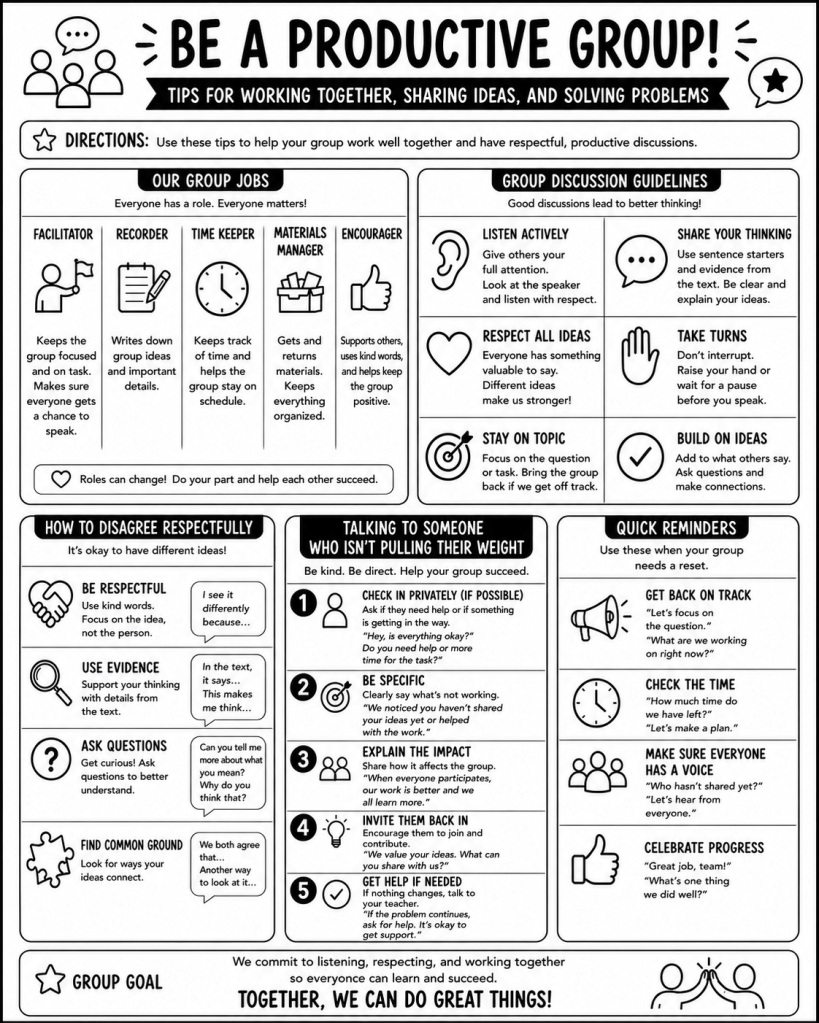
One of the easiest ways to support better collaboration is by giving students clear, visible expectations.
This free printable group work handout helps students:
- understand discussion roles
- practice respectful disagreement
- stay on task during collaboration
- solve small conflicts independently
- encourage participation from all group members
It works especially well for:
- book clubs
- literature circles
- science labs
- project-based learning
- Socratic seminars
- small-group intervention
- collaborative writing activities
Download the free printable and use it during the first weeks of school, before group projects, or anytime group work needs a reset.
Pin this for better middle school small groups...
Why Middle School Students Struggle with Group Work
Middle school students are still developing:
- emotional regulation
- communication skills
- self-awareness
- confidence
- empathy
- patience
- organization
That means group work can quickly fall apart without structure.
Many students simply do not know:
- how to disagree respectfully
- how to share “airtime”
- how to stay on task
- how to encourage work quietly alongside each other
- how to redirect a peer who is off-task
- how to solve small conflicts calmly
Not knowing how to do these things does not mean they are disrespectful or incapable.
It just means they need modeling, practice, and repetition.
Teach Collaboration Like an Academic Skill
One of the biggest mistakes teachers can make is assuming students should already know how to collaborate in a group.
Instead, treat collaboration like teaching reading or writing:
- model it
- practice it
- revisit it
- reflect on it
This is where classroom visuals and discussion systems become incredibly helpful.
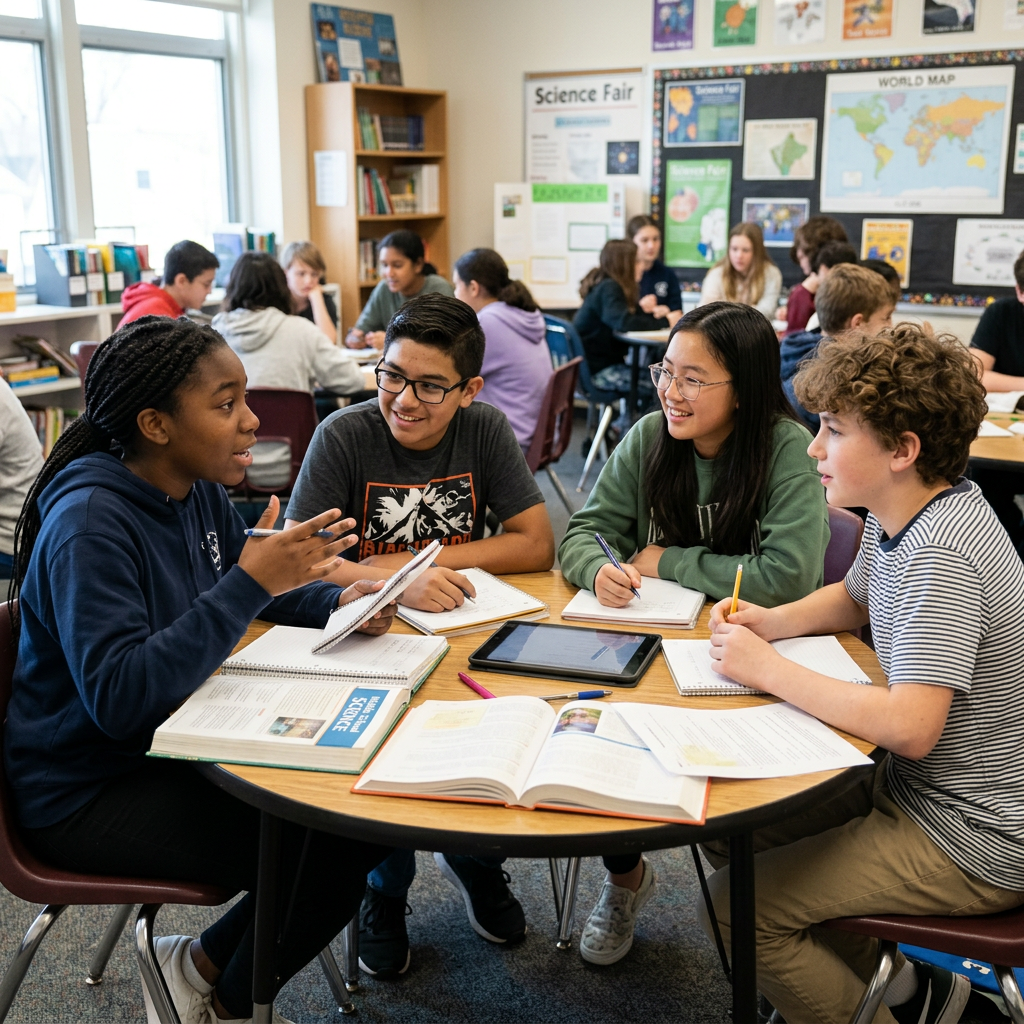
Learning how to work together may be one of the most important things middle school teaches.
Mini-lessons over the following topics can transform the classroom culture:
- group roles
- discussion expectations
- respectful disagreement sentence stems
- conflict-resolution steps
- reminders for staying on task
Each lesson can be supported with an anchor chart or handout.
Students need visible systems because middle school emotions often move faster than middle school problem-solving skills.
Mini-Lesson Idea #1: “What Does Bad Group Work Actually Look Like?”
One of the fastest (and most fun) ways to improve how small groups learn to work together is through role-play.
Instead of beginning with a lecture about expectations, let students see what ineffective collaboration looks like.
Step 1: Perform a Terrible Group Discussion
Ask a few students to act out a chaotic group scenario.
Examples:
- one student talks nonstop
- another refuses to participate
- someone interrupts constantly
- one student dismisses every idea
- two students do all the work while others stare at the ceiling
Keep it exaggerated and funny.
Middle school students love recognizing familiar classroom behaviors.
Step 2: Debrief the Chaos
Ask students:
- What went wrong?
- Which behaviors hurt the group?
- Which person would be hardest to work with?
- What could improve this discussion?
This reflection helps students identify productive behaviors on their own.
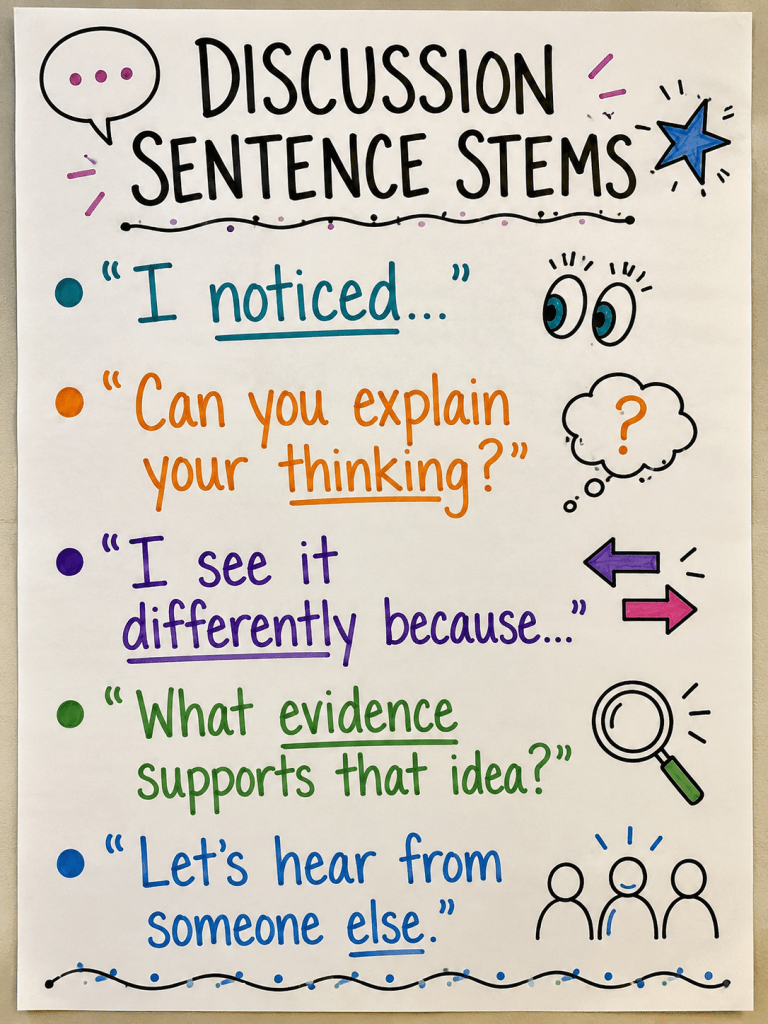
Step 3: Introduce Discussion Stems
Now, students are ready for practical tools.
Offer students the following sentence stems:
- “I noticed…”
- “Can you explain your thinking?”
- “I see it differently because…”
- “What evidence supports that idea?”
- “Let’s hear from someone else.”
Students participate more confidently when the small-group discussion feels structured rather than socially risky.
The Power of Simple Group Roles
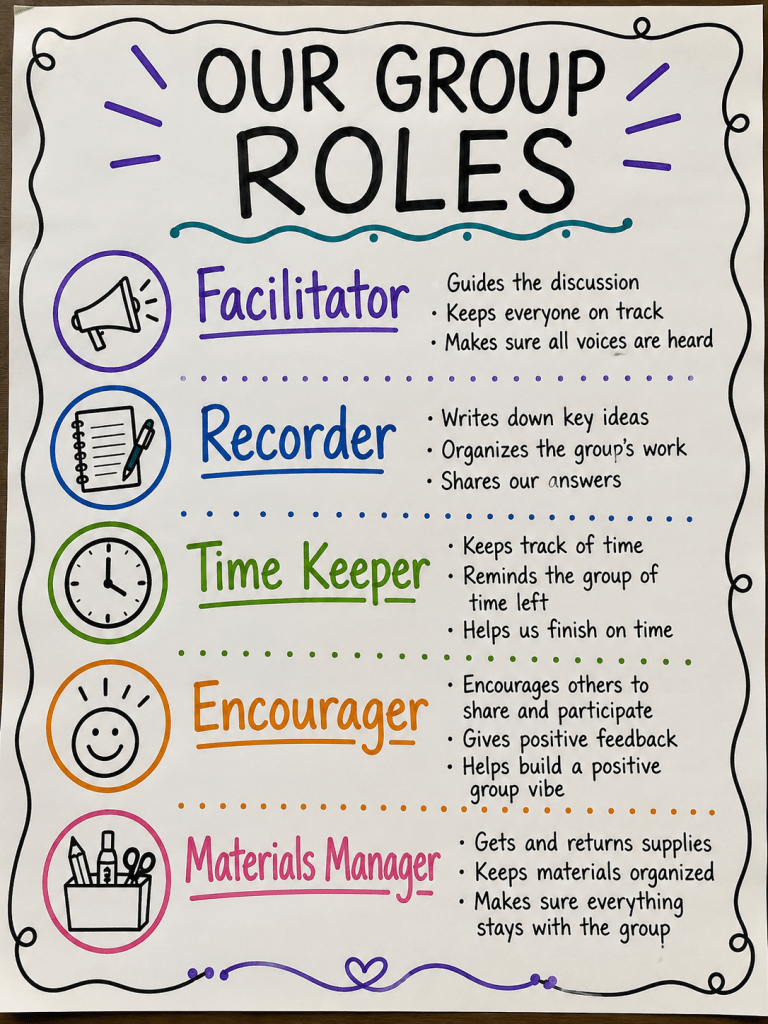
Group work improves dramatically when every student has a purpose.
Without roles:
- one student becomes the unofficial boss
- quieter students disappear
- stronger students become resentful
- off-task behavior spreads quickly
Simple, rotating jobs help students stay accountable.
Effective Group Roles for Middle School
- Facilitator
- Recorder
- Time Keeper
- Encourager
- Materials Manager
The key is keeping roles simple and visible.
Students should understand their responsibility within thirty seconds.
Mini-Lesson Idea #2: Teaching Students to Solve Small Conflicts Independently
Many students immediately escalate group problems to the teacher because they have never learned another option.
Teachers constantly hear:
- “He’s not doing anything.”
- “She’s being annoying.”
- “Can I switch groups?”
- “They won’t listen to me.”
Instead of immediately stepping in, teach students a simple progression for solving minor conflicts themselves.
The Scenario:
A group member has stopped participating and is distracting others.
Ask students:
“What should happen next?”
Most students immediately answer:
“Tell the teacher.”
Instead, teach this progression:
Check in privately
“Are you okay?”
“Do you need help getting started?”
Be specific
“We still need your ideas for this section.”
Explain the impact
“When everyone participates, we finish faster.”
Invite them back in
“What do you think we should write here?”
Ask for teacher help only if needed
This teaches students something incredibly valuable: Not every uncomfortable interaction requires adult intervention.
Discussion Stems Reduce Social Anxiety
A surprising number of middle school students stay silent during group work because they genuinely do not know how to enter conversations.
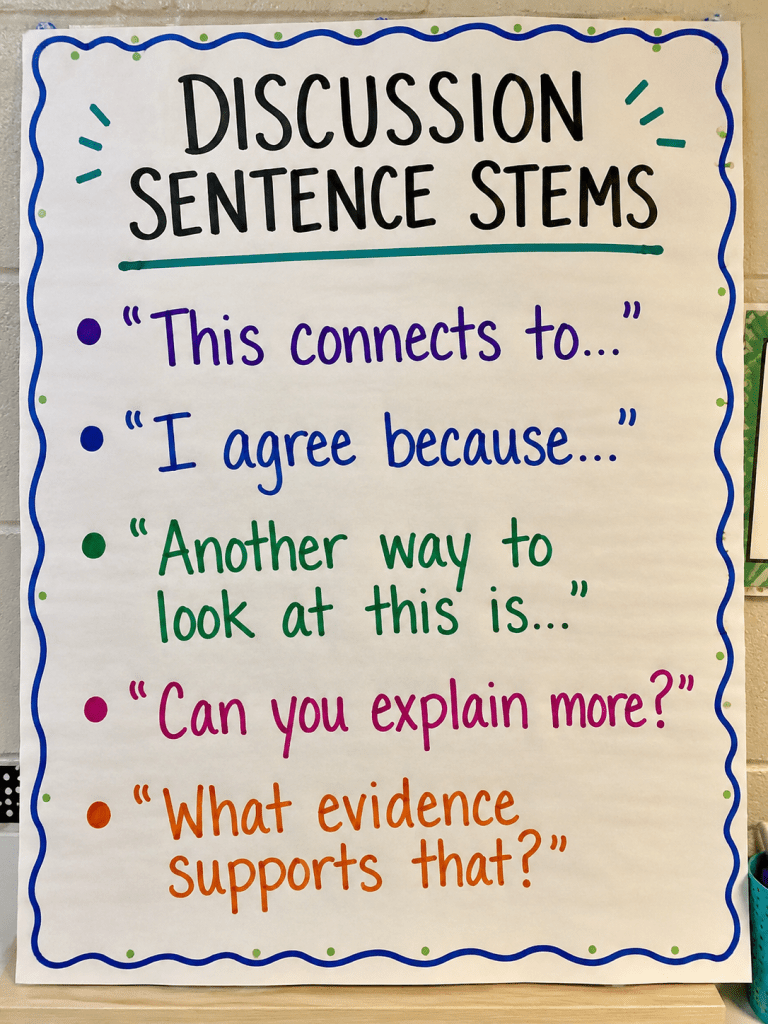
Sentence stems help hesitant students contribute without feeling exposed.
Some favorites:
- “This connects to…”
- “I agree because…”
- “Another way to look at this is…”
- “Can you explain more?”
- “What evidence supports that?”
Students who struggle socially often thrive when discussion becomes predictable and structured.
Normalize Imperfect Collaboration
Not every small group session will go smoothly.
Some days:
- students get distracted
- personalities clash
- discussions feel awkward
- groups need redirection
That is normal.
Working with other people is messy for adults too.
The goal is progress, not perfection.
When classrooms consistently teach:
- respectful disagreement
- accountability
- discussion routines
- reflection
- shared responsibility
Then students slowly become more capable of handling collaboration independently.
And eventually, something important happens…
The teacher stops managing every conversation.
Students begin managing themselves.
That shift changes everything.
Final Thoughts on Teaching Collaboration in Middle School
Middle school classrooms are one of the few places where students can safely practice:
- listening
- disagreeing respectfully
- compromising
- contributing
- encouraging others
- solving problems together
Those skills deserve direct instruction.
Because someday students may forget a grammar rule or a vocabulary word.
But knowing how to work well with other people?
That skill follows them absolutely everywhere.
 The Efficient English Teacher
Leave a comment